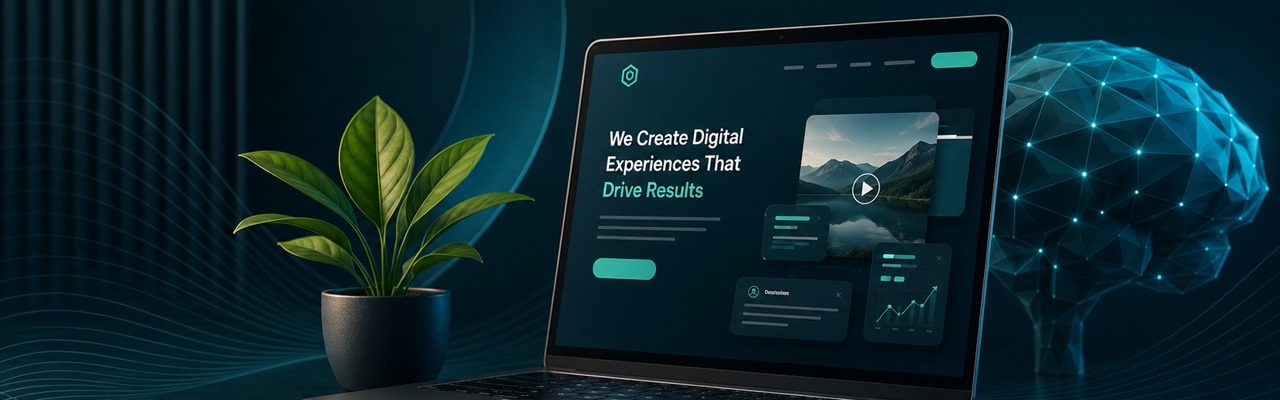
Every colour, headline, image and button influences how visitors feel when they land on a website. Within seconds, users form opinions about trust, credibility and professionalism. Those first impressions often determine whether someone stays on the site or leaves to visit a competitor.
Businesses that understand the psychology behind web design are far more likely to turn visitors into enquiries, leads and customers.
First Impressions Happen Almost Instantly
When someone visits a website for the first time, they begin making subconscious judgments immediately. People naturally assess whether a business feels trustworthy, professional and relevant to their needs.
An outdated or cluttered website can quickly create doubt, even if the company itself offers excellent products or services. Modern consumers associate website quality with business quality.
Clean layouts, professional imagery and strong branding help create confidence from the very beginning. A website should instantly communicate that the business is credible and capable.
Simplicity Reduces Friction
One of the biggest mistakes businesses make is overwhelming visitors with too much information.
When users are presented with excessive text, confusing navigation or too many competing elements, decision fatigue begins to appear. Instead of taking action, visitors often leave the website entirely.
High converting websites focus on clarity and simplicity. They guide users naturally through the page without creating confusion.
Good web design removes friction rather than adding to it.
Trust Signals Influence Buying Decisions
Trust plays a major role in online behaviour. Before contacting a business or making a purchase, users want reassurance that they are making the right decision.
This is why trust signals are so important.
Customer reviews, testimonials, case studies, recognisable brands, secure website indicators and professional design all contribute to credibility. Even small details such as clear contact information and polished branding can influence conversion rates.
People are naturally more likely to engage with businesses that feel established and trustworthy.
Colours Influence Emotion
Colour psychology has a significant impact on how users perceive a website.
Different colours create different emotional responses. Blue is often associated with trust and professionalism. Green is linked with growth and positivity. Darker tones can create a more premium and sophisticated feel.
High converting websites use colour strategically rather than randomly. Strong contrast is often used to draw attention towards important areas such as calls to action or enquiry buttons.
The goal is not simply making a website look attractive. It is creating the right emotional response.
Users Need Direction
Visitors should never feel unsure about what to do next on a website.
Strong calls to action help guide users towards the next step, whether that is requesting a quote, making an enquiry or completing a purchase.
Many low performing websites fail because they lack direction. Users browse pages without clear guidance and eventually leave without taking action.
High converting websites create a clear journey that feels natural and easy to follow.
Social Proof Creates Reassurance
People are heavily influenced by the behaviour and opinions of others. This is known as social proof.
When potential customers see positive reviews, testimonials or examples of previous work, it helps reduce uncertainty. It reassures users that other people have already trusted the business successfully.
This psychological effect is incredibly powerful online where customers cannot physically interact with a business before making contact.
The more reassurance a website provides, the more likely users are to convert.
Mobile Experience Matters More Than Ever
Modern consumers expect websites to work perfectly across every device. A frustrating mobile experience creates immediate negative reactions.
Buttons that are difficult to press, slow loading pages or cluttered layouts all increase frustration and reduce conversions.
A smooth mobile experience creates confidence and keeps users engaged for longer. Businesses that neglect mobile usability often lose a large percentage of potential customers without realising it.
Emotion Often Drives Action
Many buying decisions are emotional before they become logical.
Customers want to feel confident, reassured and understood. Strong websites connect with users emotionally through messaging, imagery and overall presentation.
A website should not simply display information. It should create a feeling.
Businesses that understand emotional engagement are often far more successful at generating enquiries and conversions online.
High Converting Websites Are Built With Strategy
The best performing websites are rarely accidental. Every section, layout choice and user interaction is designed with purpose.
High converting websites combine psychology, user experience, branding and marketing strategy to create a seamless customer journey. They are designed not just to look impressive, but to influence behaviour and encourage action.
In a competitive online market, businesses only have a short window to capture attention and build trust.
The companies that understand this are the ones most likely to convert visitors into customers.