But are they effective, or just another automated feature that removes control?
This guide breaks down exactly how Performance Max works, where it excels, where it falls short, and whether it is the right fit for your business.
What Are Performance Max Campaigns?
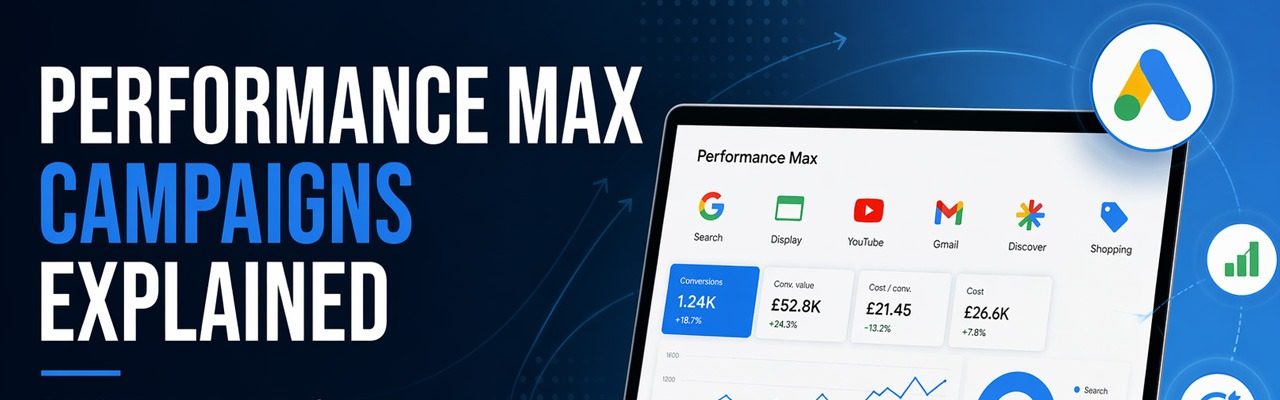
Google Ads Performance Max, often shortened to PMax, is a goal-based campaign type that uses automation and machine learning to serve ads across all of Google’s inventory from a single campaign.
That includes
- Search
- Display
- YouTube
- Gmail
- Discover
- Shopping
Instead of manually building separate campaigns for each channel, Performance Max combines everything into one unified system.
How Performance Max Actually Works
At its core, Performance Max relies on automation. You provide the inputs, and Google handles the rest.
You supply:
- Headlines and descriptions
- Images and videos
- Audience signals
- Conversion goals
- Google controls
- Where ads appear
- Who sees them
- Bidding strategy
- Creative combinations
It uses machine learning to test combinations and optimise towards your defined objective, such as leads, sales, or website traffic.
Why Google Is Pushing Performance Max
There is a strategic reason behind the push.
Google is moving toward:
- Automation over manual control
- Data driven targeting instead of keyword dependency
- Cross channel attribution rather than siloed campaigns
In simple terms, Performance Max aligns with Google’s long term direction. Less micromanagement from advertisers and more reliance on algorithmic optimisation.
The Key Benefits of Performance Max
Full Channel Coverage
Your ads can appear across the entire Google ecosystem without needing multiple campaign setups.
Advanced Machine Learning
Performance Max analyses vast amounts of data in real time, identifying patterns that are difficult to spot manually.
Time Efficiency
Less manual campaign management means fewer hours spent optimising and faster campaign deployment.
Strong for Ecommerce
When paired with a product feed, Performance Max can be highly effective for dynamic product ads, shopping placements, and scaling online sales.
The Downsides and Why They Matter
Reduced Control
You do not control exact keyword targeting, specific placements, or detailed bidding adjustments. For experienced advertisers, this can feel restrictive.
Limited Transparency
Reporting is improving but still lacks full search term visibility and detailed placement insights. You often do not know exactly what is driving results.
Creative Dependency
Your results are only as strong as your assets. Weak images lead to weak performance and poor copy leads to wasted budget.
Learning Period Volatility
New campaigns require time to stabilise. During this phase, performance can fluctuate and cost per conversion may increase.
When Performance Max Works Best
Performance Max tends to deliver the strongest results when the foundational elements of your marketing are already in place. This includes having accurate and consistent conversion tracking, which allows the algorithm to optimise effectively, as well as a solid bank of high quality creative assets such as images, video, and well written ad copy. It also performs better when there is enough budget available to generate meaningful data, giving the machine learning model room to test, learn, and refine its approach.
Final Thoughts: Are Performance Max Campaigns Worth It?
Performance Max campaigns can be highly effective, but only when they are implemented with a clear strategy and the right inputs. They are not a shortcut to success, but rather a system that amplifies what you give it, meaning strong data, compelling creative, and a well-structured account will often lead to positive results. When used correctly, Performance Max can increase conversions, extend your reach across multiple channels, and improve overall efficiency. However, without proper setup and oversight, it can just as easily waste budget and obscure performance insights. Ultimately, its value depends on how well it is aligned with your broader marketing strategy and how effectively you support it with the right signals.