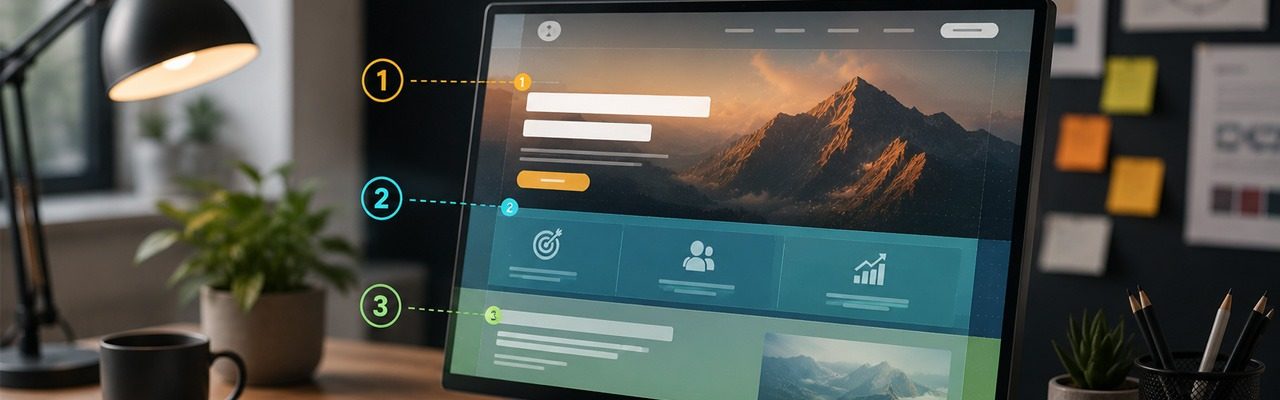
This is where visual hierarchy becomes essential.
Visual hierarchy is one of the most important principles in website design because it influences how users interact with a page. It helps guide visitors naturally through content, highlights important information and creates a smoother user experience.
When used correctly, visual hierarchy can improve engagement, increase conversions and make a website feel significantly more professional.
What Is Visual Hierarchy?
Visual hierarchy refers to the arrangement of elements on a webpage in order of importance. It controls what users notice first, second and third as they scan a page.
Through the use of size, colour, spacing, contrast, typography and layout, designers can direct user attention towards key areas such as headlines, calls to action and important content sections.
Without visual hierarchy, websites often feel cluttered, confusing and difficult to navigate.
Users Do Not Read Websites Word for Word
One of the biggest misconceptions in web design is assuming visitors carefully read every piece of content on a page.
In reality, most users scan websites very quickly. They look for visual cues that help them understand what the page is about and where they should focus their attention.
Strong visual hierarchy helps users process information faster. It creates structure and allows visitors to find important details without feeling overwhelmed.
The easier a website is to scan, the more likely users are to stay engaged.
Headlines Need to Capture Attention
Headlines are often the first thing users notice when landing on a website.
A strong headline hierarchy helps visitors instantly understand the purpose of the page. Larger, bolder typography naturally draws attention and establishes importance.
Subheadings then help break content into manageable sections, making pages feel easier to navigate and more visually appealing.
When every piece of text competes equally for attention, users often struggle to know where to look.
Colour and Contrast Influence Focus
Colour plays a major role in directing attention within website design.
High contrast elements naturally stand out more than surrounding content. This is why buttons and calls to action are often designed using brighter or more vibrant colours compared to the rest of the page.
Strategic use of contrast helps important sections become immediately visible to users.
However, balance is important. Too many bright colours or competing visual elements can create distraction rather than clarity.
Effective visual hierarchy creates focus, not chaos.
Spacing Improves Readability
Whitespace is often underestimated in website design.
Many businesses try to fit as much information as possible onto a page, believing more content creates more value. In reality, overcrowded layouts usually make websites feel harder to use.
Spacing helps separate content, improve readability and create a cleaner overall appearance. It allows important sections to breathe and prevents users from feeling overwhelmed.
Sometimes what you leave out is just as important as what you include.
Visual Hierarchy Supports Conversions
High converting websites are carefully structured to guide users towards action.
Visual hierarchy helps direct attention towards key conversion areas such as contact forms, enquiry buttons or product pages. It creates a natural flow that encourages users to continue through the customer journey.
Without clear hierarchy, visitors may become distracted or leave the site without taking action.
A good website should not simply look attractive. It should strategically guide behaviour.
Mobile Design Makes Hierarchy Even More Important
On smaller screens, visual hierarchy becomes even more critical.
Mobile users scroll quickly and have limited screen space. Websites need to communicate information clearly and efficiently without overwhelming the user.
Strong typography, clear spacing and prioritised content help mobile users navigate pages more comfortably.
Businesses that ignore visual hierarchy on mobile devices often create frustrating experiences that reduce engagement and conversions.
Good Design Feels Effortless
One of the signs of excellent visual hierarchy is that users barely notice it.
The experience simply feels smooth, intuitive and easy to follow. Visitors naturally move through the page without confusion or frustration.
Poor visual hierarchy, however, quickly becomes noticeable. Users struggle to find information, important content gets ignored and pages feel disorganised.
Good website design is not just about aesthetics. It is about communication.
Final Thoughts
Visual hierarchy plays a major role in how users experience a website. It influences attention, readability, trust and conversion rates.
Businesses that understand visual hierarchy are able to create websites that feel more professional, easier to navigate and far more effective at generating results.
In modern web design, success is not only about what users see.
It is about what they notice first.